1.-Be careful. You .......................................... (hurt) yourself.
2.-Do you know that guy? No, I ............................. (never/speak) to him.
3.-What ........................................... (you/do) by this time next year?
4.-We missed the beginning of the play. It ............................ (start) half an hour before we arrived.
5.-Right now they ................................ (work) on a new project.
6.-Don't speak during the lesson or the teacher .......................... (get) very angry.
7.-Don't worrry. I ........................... (pay) for the bill.
8.-By
this time next month, we ............................ (finish) our
lessons and we .............................. (do) our university entry
exams.
9.-..................... she always ......................... (behave) so rudely?
10.-Next week our students .................................. (visit) the new museum.
11.-Look at that car. It ........................... (crash)
12.-My sister ............................. (live) in London for three years.
domingo, 12 de mayo de 2019

jueves, 2 de mayo de 2019
REVISION. MODAL VERBS. REPHRASING
CLICK HERE TO PRACTISE
You can correct your rephrasings:
KEY
1. Rewrite the sentences using the modal verbs in brackets.
You can correct your rephrasings:
KEY
REPHRASINGS OF MODALVERBS.
1. Rewrite the sentences using the modal verbs in brackets.
1.It’s possible that Jane will visit Switzerland next year.(could)
Jane could visit Switzerland next year.
2.I’m thinking about taking Spanish lessons.(may)
I may take Spanish lessons.
3.I’m sure they’ll be home by now.(must)
They must be home by now.
4.James definitely isn’t eighteen yet!(can’t)
James can’t be eighteen yet!
5.It’s possible the weather will be sunny tomorrow.(might)
The weather might be sunny tomorrow.
6.I’m sure that Mrs Smith didn’t leave home. (can’t) Mrs Smith can’t have
left home.
7.Perhaps she’s gone to stay with her mother. (might) She might have gone
to stay with her mother.
8.It’s possible that Mr Smith committed a crime. (may)
Mr Smith may have committed a crime.
9.I’m certain that he buried something in the garden. (must)
He must have buried something in the garden.
10. Perhaps he won the lottery. (could)
He could have won the lottery.
11. I’m sure he bought a new car. (must)
He must have bought a new car.
12.Perhaps Mr Smith murdered his wife. (might)
Mr Smith might have murdered his wife.
13.I'm sure she's at home.(must).
She must be at home.
14.I know that isn't Janet. She's in America. (can’t).
She can’t be Janet. She’s in America.
15.I'm sure she thinks I'm stupid.(must).
She must think I’m stupid.
16.I bet I look silly in this coat.(must).
I must look silly in this coat.
17.They're always buying new cars. I'm certain they have a lot of money.
(must).
They must have a lot of money. They are always buying new cars.
2. Rewrite the sentences using a modal verb.
1.It isn’t necessary for you to take a jacket.
You... don’t have to take a jacket.
2. I advise you to see a dentist.
You...should/ought to go to see a dentist.
3.You aren’t allowed to talk during the exam.
You...mustn’t talk during the exam.
4.It’s forbidden to park here.
You... mustn’t park here.
5.I advise you to study harder.
You...should/ought to study harder.
6.He is obliged to go to the police station twice a week.
He...must / has to go to the police station twice a week.
7.Tom knows how to speak Spanish.
Tom...can speak Spanish.
8.He had permission to go to the party.
He...was allowed / could go to the party.
9.It isn’t possible that that is our plane.
That... can’t be our plane.
10.It isn’t necessary to take a thick coat.
You...don’t have to take a thick coat.
11.I wish I had paid for half of the meal, but I didn’t.
I should have paid for half of the meal.
12.It is possible that Jake is in his room.
Jake...may/maight/could be in his room.
13.Perhaps we will not see them at the weekend.
We... may/might not see at the weekend.
14.I don’t know if I will go to the concert.
I may/might go to the concert.
15.They are certain that bringing up children is not easy.
Bringing up children...must not be easy.
16.It is unnecessary for you to come.
You...don’t have to come.
17.I advise him to give up smoking.
He...should give up smoking.
18.Eating chewing-gum in the class is prohibited.
Students...mustn’t eat chewing-gum in the class.
19. There was an obligation to turn off the mobile phone.
We...didn’t have to turn off the mobile phone.
20. I didn’t have the ability to cook when I was younger.
I...couldn’t /wasn’t able to cook when I was younger.
3 .PERFECT MODALS REPHRASING EXERCISES
1.I’m sorry that I didn’t study enough.
I...should have studied more.
2.I’m sure that he has finished the exercise.
He...must have finished the exercise.
3.It wasn’t necessary for them to have reserved the tickets.
They...needn’t have reserved the tickets.
4.I think that Ridley Scott didn’t direct this film.
Ridley Scott... can’t have directed this film.
5.You didn’t write as many words as possible.
You...should have written as many words as possible.
6.It was wrong of you to go to that party.
You...shouldn’t have gone to the party.
7.She was able to run faster but she didn’t.
She...could have run faster.
8.We are certain that it was a disaster.
It...must have been a disaster.
9.It wasn’t a good idea for
the government to apply all those economic measures.
The government...shouldn’t
have applied all those economic measures.
10.I can’t believe your boyfriend began
smoking.
Your boyfriend can’t have
begun smoking.
lunes, 25 de marzo de 2019

jueves, 14 de marzo de 2019
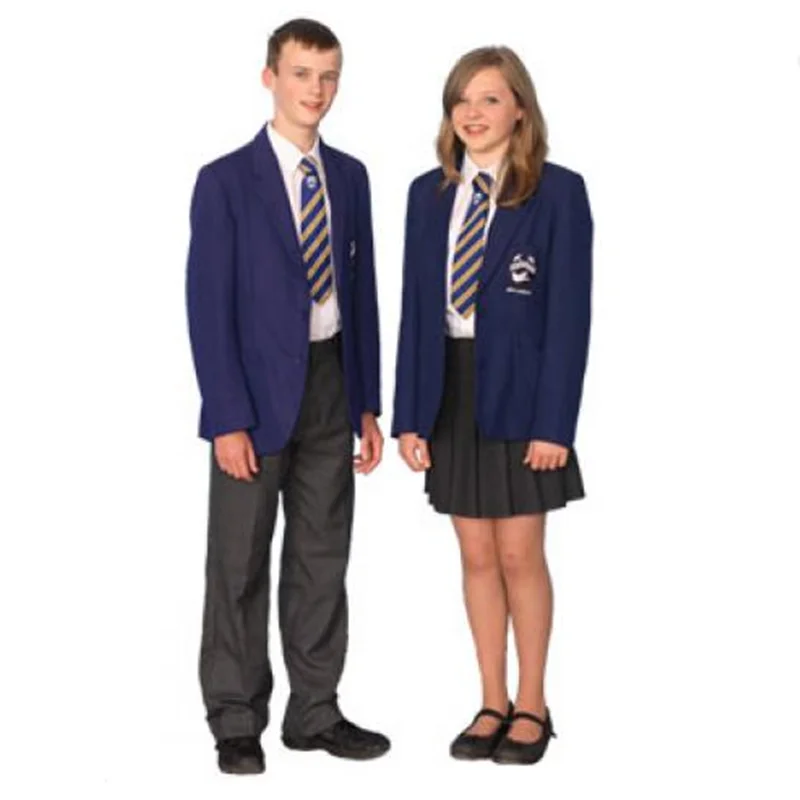
ARE SCHOOL UNIFORMS MORE CONVENIENT FOR STUDENTS??
4th year students were debating about the use of uniforms. Are
uniforms more convenient? Are they boring? What would you do if Norba
school decided to make students wear uniforms? Read an article about
this issue and then give your own opinion adding a comment.
http://debatepedia.idebate.org/en/index.php/Debate:School_Uniform_(JUNIOR)
 The
question of whether children should wear a uniform to school always
makes for a lively debate, and not only among students! In some
countries school uniform is normal and most schools make their students
wear one. Britain is the most obvious example of this, but in many other
countries with strong links to Britain uniform often has to be worn to
school - examples include Australia, Ireland, New Zealand, Singapore,
Hong Kong, South Africa and many other African countries. Uniform is
also required at almost all schools in Japan. In other countries,
particularly in continental Europe, the USA and Canada, uniform is very
rare in state-funded schools, although private schools may have one.
Debates about school uniform have been going on for decades in different
countries and districts, but during the 1990s state schools in the USA
began to adopt uniforms. At first uniform rules were seen as a way of
stopping children dressing in gang colours in troubled urban areas.
Later, claims that introducing uniform leads to better discipline and
educational results encouraged other school districts and schools to
make a change. Both the Clinton and Bush administrations were in
favour of school uniforms. Other countries have picked up on this trend.
The
question of whether children should wear a uniform to school always
makes for a lively debate, and not only among students! In some
countries school uniform is normal and most schools make their students
wear one. Britain is the most obvious example of this, but in many other
countries with strong links to Britain uniform often has to be worn to
school - examples include Australia, Ireland, New Zealand, Singapore,
Hong Kong, South Africa and many other African countries. Uniform is
also required at almost all schools in Japan. In other countries,
particularly in continental Europe, the USA and Canada, uniform is very
rare in state-funded schools, although private schools may have one.
Debates about school uniform have been going on for decades in different
countries and districts, but during the 1990s state schools in the USA
began to adopt uniforms. At first uniform rules were seen as a way of
stopping children dressing in gang colours in troubled urban areas.
Later, claims that introducing uniform leads to better discipline and
educational results encouraged other school districts and schools to
make a change. Both the Clinton and Bush administrations were in
favour of school uniforms. Other countries have picked up on this trend.
whether=if (si)
lively=animado
state-funded school=escuelas públicas
claims=afirmaciones
encouraged=animó
have picked up on this trend=han seguido esta tendencia
LISTENING ACTIVITY 1: FOR AND AGAINST SCHOOL UNIFORMS
1.-Listen without watching:
a.-What two reasons are given to support the use of school uniforms?
b.-What two reasons are given against using school uniforms?
2.-Watch and check.
LISTENING ACTIVITY 2: TEACHERS, STUDENTS AND PARENTS GIVE THEIR OPINION ON SCHOOL UNIFORMS.
1.-Watch and take notes of ideas supporting the use of uniforms and ideas against it.
http://debatepedia.idebate.org/en/index.php/Debate:School_Uniform_(JUNIOR)
whether=if (si)
lively=animado
state-funded school=escuelas públicas
claims=afirmaciones
encouraged=animó
have picked up on this trend=han seguido esta tendencia
LISTENING ACTIVITY 1: FOR AND AGAINST SCHOOL UNIFORMS
1.-Listen without watching:
a.-What two reasons are given to support the use of school uniforms?
b.-What two reasons are given against using school uniforms?
2.-Watch and check.
LISTENING ACTIVITY 2: TEACHERS, STUDENTS AND PARENTS GIVE THEIR OPINION ON SCHOOL UNIFORMS.
1.-Watch and take notes of ideas supporting the use of uniforms and ideas against it.
miércoles, 13 de marzo de 2019
viernes, 8 de marzo de 2019
domingo, 24 de febrero de 2019
Suscribirse a:
Entradas (Atom)