TRANSFORMATIONS. Complete the second sentence so that it has a
similar meaning to the first sentence. Use the word in CAPITAL LETTERS when
provided.
1. We started working here three years ago.
We ..................................... three years
2. This is the first time I have been on a plane.
I ..................................... before.
3. That’s strange! My pen isn’t here!
That’s strange! .......................................... disappeared!
4. Nicky and Jan aren’t at this school any more.
Nicky and Jan .......................................... this school
5. I saw a friend of yours a few moments ago.
I .......................................a friend of yours.
6. I’m still writing my letter.
I .........................................my letter yet.
7. Is this your first visit to South America?
Have .................................... before?
8. Oh bother! My wallet is still in the car.
Oh bother! I ........................... my wallet in the car.
9. It’s a long time since we spoke to your sister.
We ..............................to your sister for a long time.
10. Is Anna still asleep?
Has .................................. up yet?
11. Michael took a deep breath and dived into the water.
After ................... a deep breath ,he dived into the water.
12. I thought the book seemed familiar
I thought .................................. the book before.
13. I bought this coat three years ago. FOR
I ......................................... three years.
14. We’ve never seen such a funny film. EVER
It’s the .................... seen
15. John hasn’t played golf for years TIME
The ................... golf was years ago.
16. It was the first time I had met a film star. NEVER
I ............................. a film star before.
17. It’s four weeks since I spoke to Paul. HAVE
I ............................... for four weeks.
18. I met Cristina , my English teacher, last year . FOR
I ..................................................one year.
viernes, 27 de octubre de 2023
REVISION.MODULE 1. REPHRASINGS

martes, 24 de octubre de 2023
5.CHILDREN LEARN WHAT THEY LIVE

GUESS THE EXPRESSIONS MISSING AND FILL IN THE BLANKS:
Children Learn What They
Live
By Dorothy Law Nolte, Ph.D.
If children live with criticism, ....................................
If children live with hostility, ...................................
If children live with fear, .....................................
If children live with pity, ..........................................
If children live with ridicule, .....................................
If children live with jealousy, ............................
If children live with shame, ..............................
If children live with encouragement, ...........................
If children live with tolerance, ..............................
If children live with praise, ...............................
they learn appreciation.
they learn confidence.
they learn patience.
they learn to feel envy.
they learn to feel guilty.
If children live with acceptance, .............................
If children live with approval, ...........................
If children live with recognition, ...............................
If children live with sharing, ................................
If children live with honesty, ...............................
they learn it is good to have a goal.
they learn generosity.
they learn to love.
they learn to like themselves.
they learn truthfulness.
If children live with fairness, ...................................
If children live with kindness and consideration, ................
If children live with security, .................................
If children live with friendliness, .................................
they learn respect.
they learn the world is a nice place in which to live.
they learn to have faith in themselves and in those about them.
they learn justice.
Copyright 1972 by Dorothy Law
Nolte
LISTEN AND CHECK YOUR ANSWERS
viernes, 2 de junio de 2023

martes, 23 de mayo de 2023
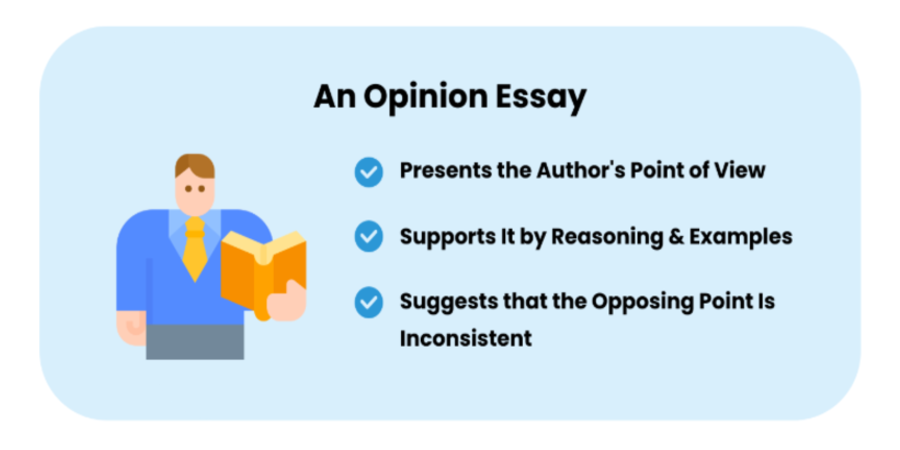
UNIT 1. OPINION ESSAY. TASK
TASK: Write an opinion essay related to fashion:
"Fast fashion and pollution"
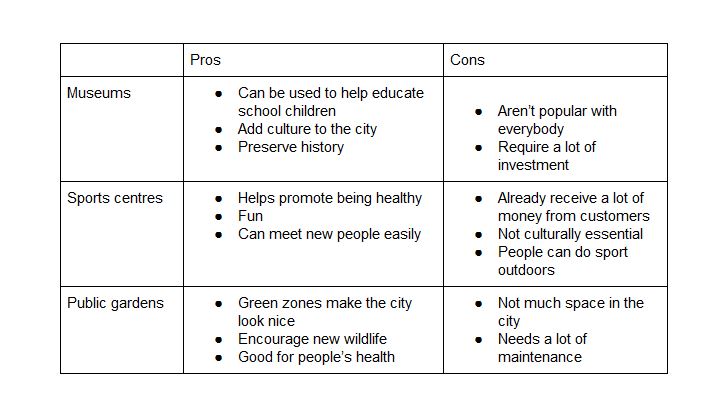
STEP 1: Pros and cons
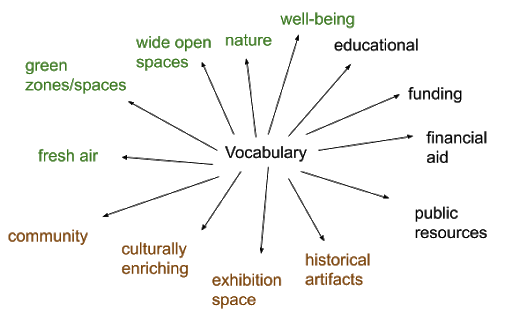
STEP 2: Find vocabulary related to the topic.
UNIT 3. OPINION ESSAYS. PLANNING YOUR WRITING
Make a plan
Take ten minutes to lay out your ideas. Make a pros and cons list. Here’s some things you might come up with when writing, for example, about museums and sport centres.
Structure your essay
The essence of a good essay is a clear structure.
Introduction
Here you want to introduce the topic in your own words. Your first line should also grab the reader’s attention, then you should paraphrase the question. Finally, try using a statistic or a rhetorical question. This will make them want to read on, right?
Paragraph 1
Discuss the first option you’ve chosen. Include a good topic sentence and remember to give reasons for your answer. Describe some of the advantages, and even some of the disadvantages too. This will give a well-balanced argument.
Paragraph 2
Here’s where you introduce the second option. Again, try to present both sides of the argument and give reasons for your ideas. Gradually work towards the conclusion.
Conclusion
State your final opinion. This should be a summary of the rest of the essay and point clearly to which option you think is the most important. Do not introduce any new arguments at this stage. The conclusion is where you tie-up any loose ends.
Language
This is an advanced piece of writing, so make sure your choice of language reflects it. You will get marked for accuracy, however, occasional errors can still be present as long as they do not impede understanding. So don’t play it too safe. This is your opportunity to show what you can do, so take some risks and have fun with it!
Vocabulary
In the writing paper you should use a range of vocabulary, including less common lexis. Brainstorm some vocabulary related to the topic. Take your time to think of nouns and compound nouns that you know at C1 level. Really let your vocabulary sparkle.
Synonyms
No one likes a broken record. Find synonyms for simple words. You want to use a variety of language, and try not to repeat yourself too much. Check out these different ways of saying the same thing:
advantage = benefit, positive, upside
disadvantage = downside, drawback
effect = influence, impact, result, outcome
problem = issue, challenge, difficulty, obstacle, setback, complication
important = valuable, essential, beneficial
expensive = costly, dear, high-priced, extortionate
cheap = inexpensive, affordable, economical
big = great, large, sizeable, considerable, wide, vast
small = slight, tiny, little
Grammar
Experiment with different grammatical forms. At this level you’re expected to have a good grasp on the grammar. You should use a range of simple and complex grammatical forms with control and flexibility. So challenge yourself with some of these…
Useful expressions
To make your essay flow it’s best to use some key phrases. These will link all your ideas together, and help it sound semi-formal. Take a look at the expressions below. Why not use some in your next essay?
Introduction:
It is often said that…
Many people feel that…
We live in an age when..
More and more…
Introducing & Addition:
Firstly, secondly, thirdly…
On the one hand…
In addition…
What is more…
Examples:
For example…
For instance…
As a case in point…
Contrasting:
In contrast…
On the other hand…
Alternatively…
However…
Conclusion:
All things considered…
As far as I’m concerned…
In light of the above…
What the examiners are looking for
When writing your essay, bear in mind what you’ll be marked on:
Content
Have you answered all parts of the question? Is everything relevant to the question?
Communicative Achievement
Is the style and tone appropriate? Remember it should be semi-formal and neutral.
Organisation
Does it follow a logical order? Have you used paragraphs and linking devices?
Language
Are you using a variety of grammar and vocabulary? Is it accurate?
Check
Now your masterpiece has come together. Remember to take time to check your work. Here’s the official Writing Checklist from Cambridge Assessment English. And our list of the most common mistakes:
- spelling
- subject + verb agreement
- singulars / plurals
- articles
- question formation
- variety of tenses
- dependent prepositions
Some final tips
Avoid contractions (I’m, they’re, we’re) as this is a formal writing.
Don’t use first person pronouns (I, my, our, us).
Practise under timed conditions.
Use model answers to practise fixed expressions.
viernes, 19 de mayo de 2023
MIXED GRAMMAR REVISION

1.-Pam wrote a romantic letter to one of her friends. (WRITE A QUESTION)
2.-I …………………………….….. (NOT SPEAK) to Jane for ages. I’m going to phone her. (CORRECT TENSES)
3.-The last time I saw him was on Monday. (REWRITE USING “SINCE”)
4.-The manager offered me a new position in the company. (CHANGE TO TWO FORMS OF PASSIVE)
5.-I spent too much money and now I regret it. (REWRITE USING A MODAL VERB)
6.-The new optician is going to check my eyes. (CHANGE TO THE CAUSATIVE FORM)
7.-For two weeks. (WRITE A QUESTION)
8.-I am really worried about the crisis because I don’t have a lot of money. (REWRITE USING A CONDITIONAL)
9.-Next Monday our school is closed because of the bank holiday. (REWRITE USING A MODAL VERB)
10.-Don’t drive so fast. This is my advice. (REWRITE USING A MODAL VERB) (REWRITE USING A CONDITIONAL SENTENCE)
11.-She won’t go on holiday if she doesn’t have enough money. (REWRITE USING “UNLESS”)
12.-She never worked as a doctor because she didn’t finish her degree. (REWRITE USING A CONDITIONAL)
13.- When I arrived at the store I realized I ………………………..(forget) my credit card. (CORRECT TENSE)
14.-With this effective course, we promise that by the end you ………..…………….. (LEARN) 500 new words. (CORRECT TENSE)
15.-An expert decorated Sally’s new flat. (CHANGE TO THE CAUSATIVE FORM)
16.- Next weekend I’m going to Glasgow. My sister lives in Glasgow. (JOIN USING A RELATIVE SENTENCE)
17.- John is one of my closest friends. I have known John for eight years. (JOIN USING A RELATIVE SENTENCE)
18.- When I lived in the UK I hated driving on the left. (REWRITE USING USED TO/WOULD OR BOTH)
19.-This second-hand car has been sold for 3000 euros. (REWRITE IN THE ACTIVE VOICE)
20.-Mary sent a very well-designed CV. However, she didn't get the job. (CONNECTORS.REWRITE STARTING BY "Although...")
21.-Mary sent a very well-designed CV. However, she didn't get the job. (CONNECTORS.REWRITE STARTING BY "Despite / In spite of...")
22.-While the students ……………………. (DO) their test, the principal entered the room. (CORRECT VERB TENSES)
23.-The optician has checked my eyes. (CHANGE TO CAUSATIVE FORM)
24.-People think mixing vaccines is not a good option. (2 IMPERSONAL PASSIVE)
25.-By this time next month we …………………….. (end) our exams and we …………………. (enjoy) our holidys. (CORRECT VERB TENSES)
domingo, 2 de abril de 2023
2 OF MY FAVOURITE PLACES

I strongly recommend visiting the Valley of Jerte. The colours in autumn and spring are amazingly beautiful, the coppers, ochres, reds and golds of the different trees; the white of the cherry blossom, the streams, the waterfalls, the river, the light, the clouds on top of the mountains. The landscape is beautiful and the valley is just one hour's drive from Cáceres. You can stay in a hotel, in a rural house in one of the villages, in a farm or even in a shepherd hut. And you can also enjoy local food: traditional dishes prepared from very old recipes. Do you fancy going?

ANOTHER EXAMPLE
What about going to Ireland? Its quite far away but it is very beautiful at this time of year. Glendalough is a scenic valley in the Wicklow Mountains. There are two very large lakes between two mountains and many old graves. There is a round tower and many old buildings from the time of Saint Kevin, who was a monk who lived there many years ago. You can climb the mountains, hire a boat, learn about the past in the museum or even just admire the landscape.
Riley's favourite place
lunes, 27 de marzo de 2023
9. REPORTED SPEECH 2 MOCK EXAMS
REPORTED SPEECH REVISION
- “I'm working in Dallas today.” / He said…
- “I think he will win the election.” / She said…
- “Anna lives in London.” / Peter said…
- “My father is going to visit us next week.” / Frank told me…
- “My brother bought a brand new Mercedes yesterday!” / She told me…
| ||||||||||
Reported Speech. Questions 1) Mandy: "Are your children reading this book?" /Mandy asked me … |
2) Jason: "Who gave you this laptop?" /Jason wanted to know… |
3) Robert: "Is Tim leaving next Friday?" /Robert wondered… |
4) Daniel: "Will it rain tomorrow?" /Daniel asked me … |
domingo, 26 de marzo de 2023
9. THE REPORTED SPEECH 1
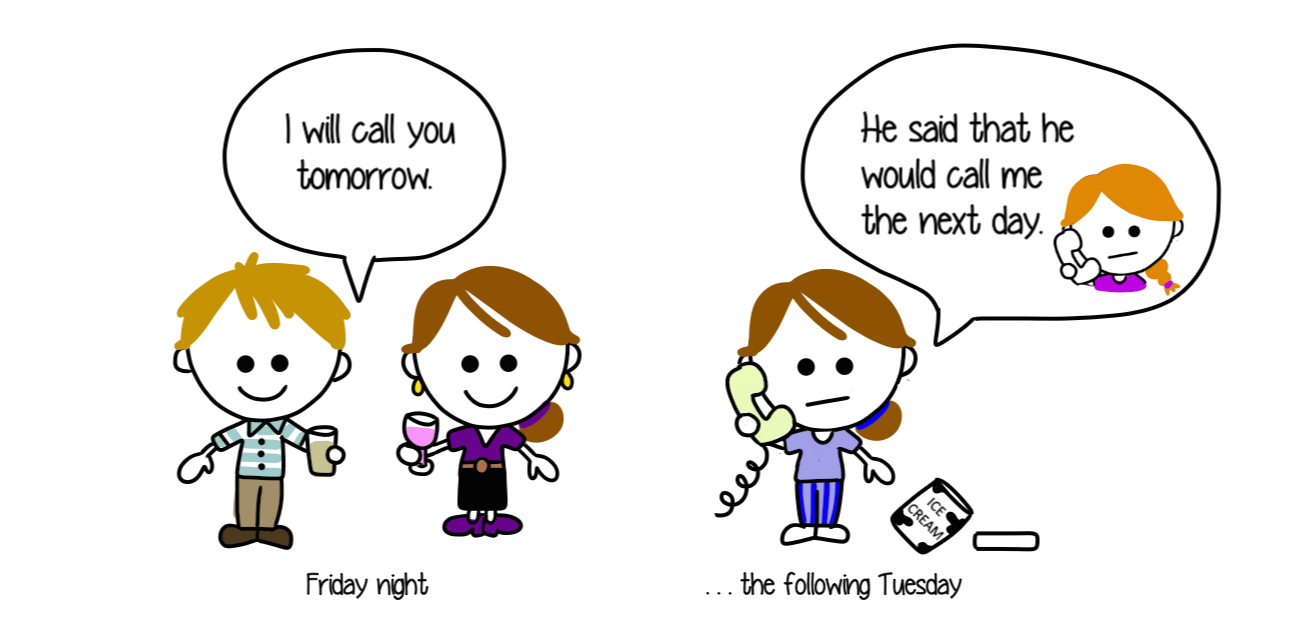

SAY OR TELL?
- You say something
- You tell someone something
| You say something | You tell someone something |
|---|---|
| Ram said that he was tired. | Ram told Jane that he was tired. |
| Anthony says you have a new job. | Anthony tells me you have a new job. |
| Tara said: "I love you." | Tara told John that she loved him. |
We usually follow tell with a personal object (the person that we are speaking to). We usually use say without a personal object:
- She told me that she loved John.
- She said that she loved John.
- He told everybody that he had to leave.
- He said that he had to leave.
With say, we sometimes use "to someone":
- He said to me that he was tired.
- Tara said to Ram that he had done very well.
- Anthony said to her, "I hope you come soon."
BASIC REPORTING VERBS: SAID OR TOLD?
PLACE AND TIME ADVERBS: CHANGES
TO START, DO THIS QUIZ
THEN DO
THIS EASY EXERCISE
YES/NO QUESTIONS:

W-QUESTIONS
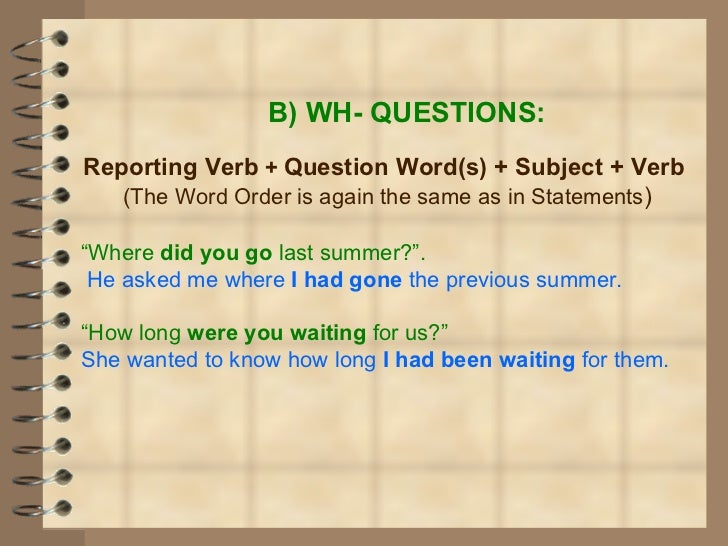
To practise, click HERE
COMMANDS
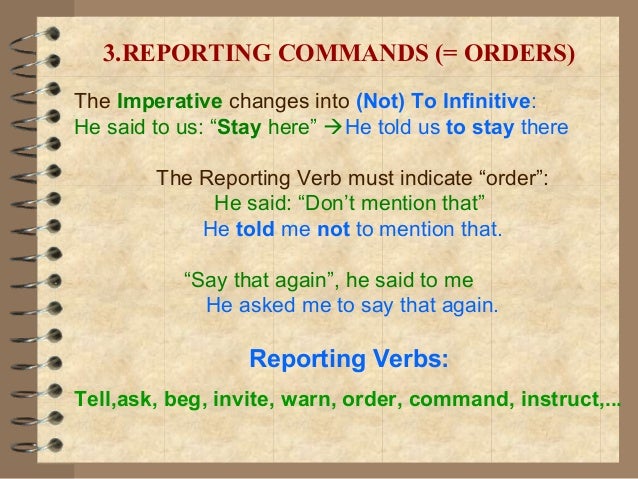
- Direct speech: "Close the window, please"
- Or: "Could you close the window please?"
- Or: "Would you mind closing the window please?"
- Reported speech: She asked me to close the window.
| Direct Request | Reported Request |
| “Please help me”. | She asked me to help her. |
| “Please don't smoke”. | She asked me not to smoke. |
| “Could you bring my book tonight?” | She asked me to bring her book that night. |
| “Could you pass the milk, please?” | She asked me to pass the milk. |
| “Would you mind coming early tomorrow?” | She asked me to come early the next day. |
- Direct speech: "Please don't be late."
- Reported speech: She asked us not to be late.
- Direct speech: "Sit down!"
- Reported speech: She told me to sit down.
| Direct Order | Reported Order |
| “Go to bed!” | He told the child to go to bed. |
| “Don't worry!” | He told her not to worry. |
| “Be on time!” | He told me to be on time. |
| “Don't smoke!” | He told us not to smoke. |